Duo Standing Desk
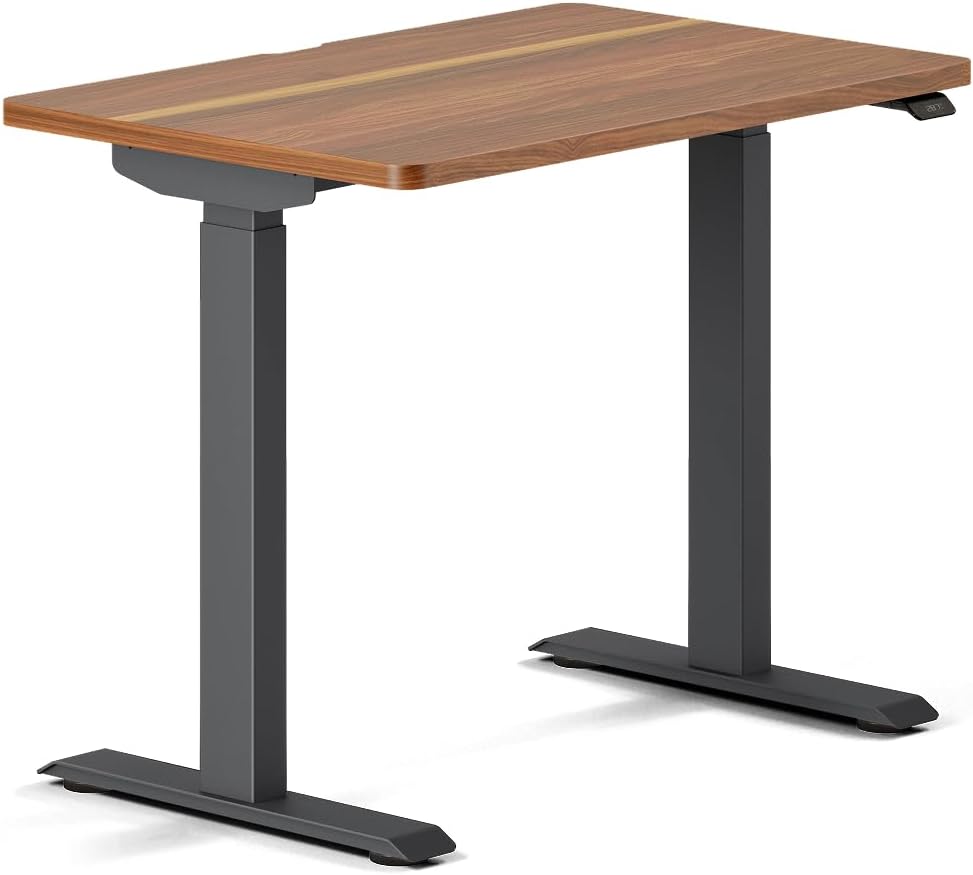
The Branch Duo is a well-executed direct-to-consumer standing desk that hits most of the mid-range benchmarks buyers care about — dual motors, BIFMA certification, and a genuinely distinctive OLED control paddle — at a price point that undercuts much of the competition. Where it shows its limitations is in ergonomic ceiling (a 47.8-inch maximum leaves taller users underserved) and, most meaningfully, a three-year motor warranty that creates real long-term ownership risk for a product category where the motor is the most likely component to eventually fail. For buyers building a Branch office ecosystem or who need a compact, minimalist desk, it earns its place at #8.
How We Scored It
Category Deep-Dives
Structural Stability
7.5 / 10 30% weightingThe Branch Duo’s most notable structural decision is the elimination of a traditional crossbar. Where most standing desks use a horizontal bar connecting the two legs beneath the desktop to resist lateral sway, Branch instead relies on mounting brackets that bolt directly into both ends of the desktop surface. This creates the Duo’s signature clean, legroom-maximizing aesthetic — there is nothing between your knees at any height — but it also means the rigidity of the entire system depends on the desktop itself acting as the structural member. Under a standard home office load, this design performs adequately at mid-range heights, and the desk’s BIFMA certification confirms it meets independent ergonomic safety standards.
At full extension near the 47.8-inch maximum, the frameless design shows its limitations relative to crossbar-equipped competitors. The absence of a rigid horizontal brace means that lateral stability at standing height is more dependent on the attachment hardware torque and desktop thickness than it would be in a desk with a dedicated stability crossbar. In practice, most users will not notice meaningful sway during normal seated or standing use at moderate heights, but the Duo is not the choice for someone placing heavy monitor arms near the edges of a 48-inch wide configuration and expecting the rigidity of a braced competitor.
The dual-motor system contributes positively to stability in a different way: synchronized motors mean each column extends at the same rate under load, eliminating the torque imbalance that can develop in single-motor designs when weight is distributed unevenly across the desktop. The two-stage lifting columns are industry standard for this price range; the Duo does not offer the greater overlap and reduced extension ratio of three-stage columns found in premium competitors, which is a factor in its mid-range stability rating. The powder-coated steel frame and desktop hardware are solid and show no signs of corner-cutting in independent reviews.
Bottom line on structural stability: The Branch Duo’s frameless design is a genuine differentiator that improves legroom and aesthetics but involves a real engineering trade-off — particularly at maximum height where a crossbar would otherwise be doing meaningful work. BIFMA certification confirms adequate safety standards are met, and the dual-motor synchronization is a positive factor. For typical home office use at moderate heights, stability is acceptable; for demanding configurations near the top of the range, competitors with crossbars have a structural advantage.
Ergonomic Range
7.0 / 10 25% weightingThe Branch Duo offers a height range of 28.0 to 47.8 inches with approximately 19.3 to 20 inches of total travel — which is narrower than many competitors in the same price range. Adding standard desktop thickness places the work surface at roughly 29 to 49 inches, a range that covers the ergonomic needs of users in the roughly 5’2″ to 6’1″ standing-height band. Users below that floor — shorter individuals who need a sitting height below 29 inches — and users above that ceiling — taller individuals standing at 6’3″ or above — are underserved by the Duo’s travel range in a way they would not be with desks offering wider adjustment spans.
The 275-pound lifting capacity is adequate for virtually any realistic home office configuration. Even a loaded setup with a solid-wood top, dual monitor arms, external hard drives, and a desktop lamp is unlikely to approach 100 pounds, leaving the Duo operating at a small fraction of its rated maximum under any normal use scenario. The two available desktop sizes — 36×24 inches and 48×24 inches — are suitable for compact home offices and standard single-monitor or laptop setups, but the 24-inch depth and 48-inch maximum width will feel limiting to users running multi-monitor arrays or who need a corner-style workspace. Branch does not offer larger desktop options on the Duo, which constrains ergonomic configurability relative to brands that support wider or deeper surfaces.
The desk comes in four desktop finishes — woodgrain, walnut, white, and charcoal — paired with two base colors, giving buyers reasonable aesthetic variety without approaching the configurability of brands like UPLIFT that offer dozens of desktop material and size combinations. For buyers whose needs fit within the Duo’s size envelope, the combination of minimalist styling and Branch’s ecosystem of matching accessories (ergonomic chairs, monitor arms, and storage) is a genuine appeal. But from a pure ergonomic specification standpoint, the Duo’s narrower height range and limited depth are objective constraints that earn it a mid-range score in this category.
Bottom line on ergonomic range: The Branch Duo covers typical home office ergonomic needs for users of average height, but its 28–47.8-inch range is narrower than most competitors and falls short at both ends for shorter and taller users. The 275-lb lifting capacity is more than adequate, but limited desktop sizing options and a fixed 24-inch depth constrain configurability for more demanding setups.
Motor & Controls
7.5 / 10 20% weightingThe Duo’s standout feature in this category is its OLED control paddle — a gesture-based interface that replaces the conventional up/down arrow buttons found on most standing desks. Rather than pressing buttons, the user pulls the paddle upward to raise the desk and pushes it down to lower it. The OLED display in the front of the paddle shows the current height in real time during adjustment, the desk name on startup, and a stand reminder timer if configured. In practice, reviewers consistently describe the paddle as intuitive after a brief learning curve, and the gesture-based interface is both a genuine usability differentiator and a visual conversation piece in a well-appointed home office.
The dual-motor system operates quietly, with noise levels that multiple independent reviewers describe as unobtrusive during adjustment in a home environment. The motors are synchronized to provide level, even lifting across the full travel range. The control system supports two height memory presets, which is technically sufficient for a desk used by one person with fixed sitting and standing ergonomic targets, but is the bare minimum — any user who wants to save a third position (a collaboration height, a treadmill height, or a monitor-only height) cannot do so without sacrificing a saved preset. Competitors at the same price frequently offer four presets.
Anti-collision detection is included and functions by sensing motor resistance during descent, stopping and reversing movement when an unexpected obstacle is encountered. Sit-stand reminders are also supported — configurable intervals that prompt the user to change position — a feature that sits between useful and easily ignored depending on the individual user. The motor and electronics package is competent and reliable based on owner feedback, though the limited two-preset memory and the gesture-only control interface (no traditional button fallback) represent minor usability constraints compared to more flexible competitors.
Bottom line on motor and controls: The OLED control paddle is the Duo’s most distinctive feature and earns it genuine design credibility — it works well and differentiates the desk in a sea of generic arrow-button panels. The dual-motor system is quiet and reliable. The limiting factor is the two-preset memory ceiling, which is the lowest in the category at this price point and will be a frustration for any user who wants more than two saved heights.
Warranty & Longevity
6.0 / 10 15% weightingThe Branch Duo’s warranty structure is the most significant objection to long-term ownership confidence in our evaluation. Branch offers a 10-year warranty on the frame and tabletop — a respectable headline figure — but limits coverage on the motor and electronics to just three years. This split creates a serious discrepancy: the frame is a welded steel structure unlikely to fail under any normal use scenario, while the motor and control electronics are precisely the components most likely to require service or replacement over a decade of daily use. A 10-year warranty on the part that almost never fails, combined with a 3-year warranty on the parts that sometimes do, is not the same as a 10-year warranty in any meaningful sense.
To put this in category context: the UPLIFT V3 offers a 15-year warranty on frame, motor, electronics, and keypad without splitting terms between components. The FlexiSpot E7 provides a 15-year comprehensive warranty covering the frame, motor, and all mechanical and electrical components. The Fully Jarvis offers a 7-year comprehensive warranty. Branch’s 3-year motor coverage is the lowest in our 12-desk guide and represents a structural disadvantage for buyers planning to use the desk for 5 to 10 years. For a brand that is a few years old and lacks the multi-decade service track record of category leaders, the warranty structure also provides less institutional confidence that claims will be honored well into the future.
Branch does appear to be a legitimate, well-funded company with a reputation for responsive customer service based on owner community feedback, which provides some reassurance beyond the literal warranty terms. The desk is BIFMA certified, which confirms the frame and structure meet validated ergonomic and safety standards. But the practical reality is that a buyer choosing the Duo over a competitor with a 5-year or 15-year motor warranty is accepting materially more long-term risk — a risk that only manifests if a motor fails after year three but before year ten, which is not an implausible scenario over a decade of daily height adjustments.
Bottom line on warranty and longevity: The 6.0 score reflects a genuine concern rather than a technicality. A three-year motor warranty on a desk you expect to use for a decade is meaningful long-term risk, particularly from a brand without a 10-to-15-year service track record. The 10-year frame coverage is solid, but the motor exclusion after year three is the most important single factor separating the Branch Duo from higher-ranked competitors in this guide.
Value
7.0 / 10 5% weightingThe Branch Duo’s entry price positions it as a competitive option in the mid-range standing desk segment. At that price, the dual-motor configuration, OLED control paddle, BIFMA certification, and frameless aesthetics represent a genuine value proposition for the right buyer. The desk competes credibly against single-motor options at similar prices and offers a more refined user experience than purely budget-oriented competitors. The optional drawer add-on — which takes advantage of the Duo’s unique frameless underside architecture — is a genuinely useful differentiator that no traditional crossbar-equipped desk can replicate in the same form factor.
The value calculation changes when the warranty structure is weighted in. A competitor priced slightly higher but offering a 5-year motor warranty effectively delivers lower cost per year of covered protection. When the Duo’s motor warranty expires at year three, the buyer carries the full financial risk of any motor replacement — a part that can cost a meaningful amount, plus labor, for a proprietary OEM component. Buyers who plan to use their desk for three years and then upgrade are getting a strong deal; buyers who expect to use the desk for eight or ten years are accepting a warranty gap that erodes the apparent value advantage.
Bottom line on value: The Branch Duo is a competitive value within its warranty horizon — the dual motors, OLED paddle, and clean design deliver real differentiation at the price point. For buyers with a shorter time horizon or who are intentionally building a Branch ecosystem, the value case is solid. For buyers optimizing for total 10-year cost of ownership, the 3-year motor warranty is a meaningful variable that makes higher-warranty competitors more competitive than headline prices suggest.
Assembly & Usability
7.0 / 10 5% weightingThe Branch Duo’s assembly is a mixed experience. On the positive side, Branch uses reusable threaded inserts rather than self-tapping wood screws for the desktop attachment — a design choice that makes disassembly and reassembly more reliable, whether for a move or a configuration change. The packaging is organized and hardware is labeled, and the desk can typically be assembled by one person, though the desktop flip step is easier with two. The cable management notch on the rear of the desktop and the optional cable organizer accessory address the practical wiring reality of most home office setups.
The most consistent reviewer complaint about assembly is build time. Unlike some competitors that ship mostly pre-assembled or use faster attachment mechanisms, the Duo requires a methodical multi-step process that runs longer than average — approximately 90 to 120 minutes for a careful solo assembly. The frameless leg attachment, which requires precise alignment on both ends simultaneously before tightening, is the most fiddly step and can require repositioning if alignment is off before hardware is torqued down. This is not a significant issue in the long run — the desk goes together once — but first-time desk assemblers may find the process less intuitive than competitors with simpler hardware designs.
Day-to-day usability is positive. The OLED paddle is responsive and visually engaging, and the sit-stand reminder feature is easy to configure via the control interface. The desk’s minimalist underside — particularly with the optional drawer installed — creates a genuinely clean workspace aesthetic that is hard to achieve with crossbar-equipped competitors. The Branch furniture ecosystem (matching ergonomic chairs, monitor arms, and accessories) makes the Duo a natural hub for buyers who want a unified, aesthetically coherent home office setup.
Bottom line on assembly and usability: Assembly is well-designed but time-consuming, and the frameless leg alignment step requires patience. Day-to-day usability is strong: the OLED paddle is distinctive and practical, and the clean frameless aesthetic is a genuine advantage for minimalist home offices. The desk’s fit within Branch’s broader furniture ecosystem is a real appeal for buyers who are already invested in or considering other Branch products.
About the Manufacturer
Branch Furniture is a direct-to-consumer office furniture startup headquartered in New York City. Founded in 2018, Branch entered the market with a focus on making commercial-quality ergonomic office furniture — chairs, desks, and accessories — accessible to home office buyers and small businesses who were previously limited to consumer-grade products or prohibitively expensive contract furniture. The company sells primarily through its own website and through Amazon, without traditional retail distribution.
Branch’s product design philosophy emphasizes clean aesthetics, cohesive ecosystem integration, and a compact form factor suitable for urban apartments and smaller home offices where space is at a premium. The Duo Standing Desk represents the brand’s second-generation electric desk, incorporating dual motors and the OLED control paddle as meaningful upgrades over the original Branch Standing Desk. Branch’s chair lineup — including the Ergonomic Chair Pro — is well-regarded in independent reviews and has established the brand’s credibility as a serious ergonomics supplier, not just a desk company.
As a relatively young company, Branch lacks the multi-decade service track record of category veterans like UPLIFT (founded 2002) or the manufacturing scale of FlexiSpot. The brand’s customer service is consistently reviewed positively in owner communities, and the company appears well-funded and actively growing its product line. However, buyers should factor the brand’s limited longevity into their warranty calculus — a 10-year warranty from a brand that is itself less than 10 years old carries inherently more institutional uncertainty than the same term from an established category leader with a demonstrated long-term service record.