MAGNUS Pro XL
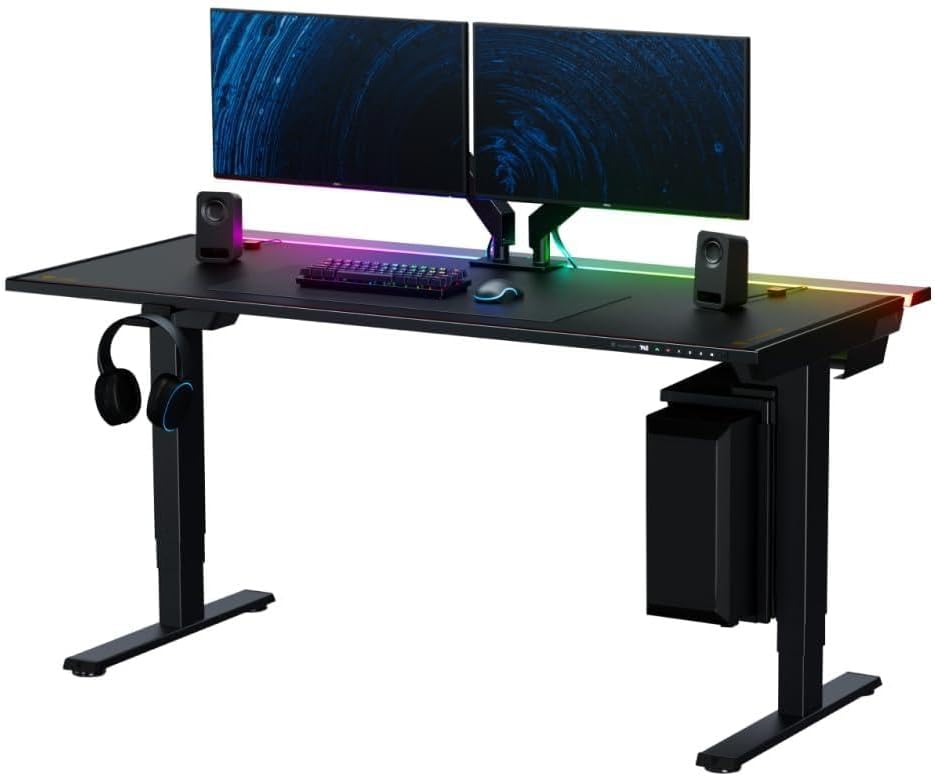
The Secretlab MAGNUS Pro XL brings unmistakable build quality and a genuinely innovative magnetic accessories ecosystem to the standing desk category — but the premium gaming brand’s 5-year warranty and a height ceiling that trails ergonomic-first rivals make it a harder sell for buyers prioritizing long-term functionality over aesthetics. Its steel surface, integrated power column, and full-length cable tray set a standard for workspace aesthetics that no competitor matches; the question is whether those differentiators justify the cost over a desk built from the ground up for ergonomic performance.
How We Scored It
Category Deep-Dives
Structural Stability
8.0 / 10 30% weightingThe MAGNUS Pro XL’s structural story begins with a decision most standing desk manufacturers never make: the desktop surface is steel. Rather than MDF laminate, bamboo, or solid wood, Secretlab engineered a steel-skinned top that contributes to overall frame rigidity in a way soft-core desktop materials cannot. The result is a desk that behaves more like a machined platform than a furniture product — the steel surface itself functions as a structural element, resisting the lateral flex that propagates from the legs through a softer top under load. At sitting heights, wobble is effectively absent; at full standing height, the desk resists shaking noticeably well for a two-column design.
The two-leg column design is the primary structural limitation here. Category leaders like the UPLIFT V3 use three-stage telescoping columns with longer leg overlap at any given height, which produces measurably less flex at full extension. The MAGNUS Pro XL uses two-stage columns, which means greater mechanical play at maximum height compared to three-stage competitors. At 49.2 inches — near the top of its range — taller users will notice some sway under dynamic load, such as typing vigorously or bumping the desk edge. This is a known physics constraint of the two-stage design, not a build quality failure, but it is a real difference relative to the best three-stage frames in this guide.
That said, Secretlab’s engineering quality in every hardware element — the column finish, the leg extrusions, the crossbar mounting points — reflects a brand accustomed to building products for gaming enthusiasts who scrutinize build quality closely. The feet are stable, the column travel is smooth, and the frame exhibits none of the looseness or play at connection points that characterizes cheaper desk frames at the same height. The 8.0 score reflects genuine structural competence held back primarily by the two-stage column architecture.
Bottom line on structural stability: A steel surface that doubles as a structural element and high-quality column hardware produce a genuinely solid standing desk — but two-stage columns limit stability at maximum extension compared to three-stage category leaders. Strong for its architecture; not the top performer in the category.
Ergonomic Range
7.0 / 10 25% weightingThe MAGNUS Pro XL’s height range of 25.6″ to 49.2″ at the frame — representing approximately 23.6 inches of total travel — covers the majority of adult users comfortably but falls short of the broadest ergonomic specifications in this guide. Adding standard desktop thickness of approximately 1 inch, the work surface reaches roughly 50.2 inches at maximum height. This is adequate for most users up to about 6’2″ in standing position, but taller users who need a work surface above 51 inches — accommodated by desks like the UPLIFT V3 with a 51.1-inch work surface maximum — will find the MAGNUS Pro XL’s ceiling limiting. At the lower end, the 25.6-inch minimum is competitive and accommodates seated users comfortably.
The XL surface at 70.0″ × 31.5″ is a genuine ergonomic asset for multi-monitor setups or content creators who need lateral spread. This is among the larger fixed desk surfaces in the category and provides more room than the standard MAGNUS Pro (59.1″ × 27.6″) for setups with two large monitors plus accessories. However, unlike the UPLIFT V3’s extensive size configurability — which lets buyers specify width, depth, and material at purchase — the MAGNUS Pro XL is available only in its fixed XL format. Buyers who need a different size or a narrower footprint for a compact room cannot configure to their needs.
Weight capacity of 265 lbs (120 kg) is adequate for virtually any home office configuration, though it meaningfully trails the UPLIFT V3’s 355 lb ceiling. In practice, even an ambitious dual-monitor setup with a desktop computer, arms, and accessories rarely exceeds 80–100 lbs, so the real-world distinction is minor. The more relevant ergonomic constraint is the fixed desktop size and the height ceiling — both of which limit the MAGNUS Pro XL’s adaptability to a narrow range of users and room configurations.
Bottom line on ergonomic range: A competitive minimum height and a large XL surface area are assets, but a 49.2-inch maximum that leaves taller users underserved, a fixed-size desktop that eliminates configurability, and a weight capacity below category leaders collectively hold this score to 7.0. Ergonomic-first buyers will find the UPLIFT V3 or FlexiSpot E7 more adaptable.
Motor & Controls
7.5 / 10 20% weightingThe MAGNUS Pro XL uses a dual-motor system with one motor per column, electronically synchronized for a level, balanced lift across the full height range. In practice, the motors are notably quiet — consistently described by reviewers as whisper-quiet — and exhibit smooth, gentle acceleration and deceleration at the start and end of each movement. There is no perceptible jerk or lag at transition points, which matters in home office environments where noisy or jolting desk transitions interrupt concentration. Secretlab has invested in motor quality appropriate to the desk’s premium positioning.
The touch control panel, embedded flush along the front edge of the steel surface, offers three programmable height presets and a child lock to prevent accidental height changes. Three presets is sufficient for most single-user configurations — a seated height, a standing height, and a third position for perching or transitional use — but falls one short of the four-preset standard common among ergonomic-first competitors including the UPLIFT V3. Users who share the desk between two people with meaningfully different heights will find three presets limiting. The panel itself is responsive and cleanly integrated into the steel surface.
The anti-collision detection system stops and reverses the motor when resistance is encountered during descent, and reviewers have consistently rated the response as quick and reliable — the desk halts promptly rather than requiring sustained pressure to trigger. This is a functional implementation of a feature that varies considerably in quality across the category. One notable differentiator: the integrated power supply column routes the motor power supply invisibly through one leg and feeds a built-in electrical outlet and USB ports at desk level, eliminating the external power brick and associated cable clutter that characterize all competitors.
Bottom line on motor and controls: Dual quiet motors, smooth motion, responsive anti-collision detection, and a genuinely differentiated integrated power supply are strong positives. Three memory presets rather than four and a touch panel that prioritizes aesthetics over feature depth limit the score to 7.5. Motor quality exceeds what you’d expect for this price; control feature set does not.
Warranty & Longevity
6.5 / 10 15% weightingThe MAGNUS Pro XL’s 5-year warranty is the most significant weakness in an otherwise capable desk. At the MAGNUS Pro XL’s premium price tier, a 5-year term compares unfavorably to both the UPLIFT V3 and the FlexiSpot E7, each of which provides 15-year comprehensive coverage on frame and motor alike. This is not a marginal difference — it is a 10-year gap in the most critical assurance a standing desk manufacturer can offer. Motors and control electronics are the components most likely to require attention over a 10-to-15-year ownership period, and a 5-year term means those costs fall entirely to the buyer after year five.
Secretlab’s brand history offers some grounds for longevity confidence. The company has been in continuous operation since 2014, maintains an active global support operation, and has a track record of supporting products through their useful lives. Unlike some gaming-adjacent brands that enter the desk market opportunistically and exit without maintaining service networks, Secretlab’s desk business is a deliberate platform investment — the MAGNUS line is backed by a brand with the scale and reputation to support it long-term. This contextual durability matters even when the written warranty term is short.
The steel surface itself has a longevity advantage over wood-core competitors: it will not warp, swell, or delaminate over time, which are common long-term failure modes for MDF and laminate tops. However, steel surfaces are susceptible to scratches, and the magnetic coating layer may show wear over years of daily use with metal accessories. Replacement desktop options are limited by the desk’s proprietary accessory ecosystem, which could create serviceability constraints if Secretlab ever discontinues the product line.
Bottom line on warranty and longevity: A 5-year warranty at this price point is the most straightforward knock against the MAGNUS Pro XL. Secretlab’s brand stability and the steel surface’s inherent durability provide some compensation, but the 10-year gap relative to UPLIFT and FlexiSpot is real and consequential for buyers who plan to keep this desk for a decade.
Value
6.0 / 10 5% weightingThe MAGNUS Pro XL occupies a genuinely difficult value position: it is priced as a premium ergonomic standing desk but is not optimized for the ergonomic metrics this category is built around. The 5-year warranty, two-stage columns, three memory presets, and fixed desktop size are specifications that belong to the mid-tier of the standing desk market, while the steel surface, magnetic ecosystem, and integrated power column are differentiators that justify a premium among buyers who specifically value workspace aesthetics and cable management. The result is a desk that delivers outstanding value for a narrow buyer profile and mediocre value for the broader ergonomic-focused market.
Compared directly to the UPLIFT V3 at a similar price point, the MAGNUS Pro XL trades 10 years of warranty coverage, three-stage stability, and four memory presets for a steel surface and proprietary accessories. That is a trade a gaming setup enthusiast might make willingly; it is not a trade most home office buyers should make unconsciously. The FlexiSpot E7, available at meaningfully lower cost, matches or exceeds the MAGNUS Pro XL on every measurable ergonomic specification while offering the same 15-year warranty advantage.
Bottom line on value: The MAGNUS Pro XL’s differentiated features — steel surface, magnetic accessories, integrated power — justify a premium over generic standing desks. They do not justify parity pricing with the UPLIFT V3 or FlexiSpot E7 for ergonomic-focused buyers. This is a strong product for the right buyer; the right buyer is not most people shopping for their first standing desk.
Assembly & Usability
7.0 / 10 5% weightingAssembly of the MAGNUS Pro XL is a two-person task in practice, if not in name. The desk weighs approximately 68 kg (150 lbs) fully assembled, and the steel desktop alone is substantially heavier than the wood-core tops of competitors — lifting and positioning it onto the frame without assistance is uncomfortable at best and potentially damaging to the product or the assembler. Secretlab provides detailed assembly guides and the hardware package is logically organized, but the physical weight of the product means setup effort is higher than most standing desks regardless of instruction quality.
Once assembled, the MAGNUS Pro XL is notably easy to live with day-to-day. The magnetic cable management system — a full-length tray running the entire width of the desk, closed by a sturdy magnetic lid — routes cables out of sight without the zip-tie wrestling matches that characterize cable management on conventional desks. The integrated power column, which houses the motor power supply invisibly inside one leg and surfaces as an electrical outlet and USB ports at desk level, eliminates the external power brick entirely. These are features that reduce ongoing friction with the product rather than assembly friction with the initial setup.
The touch panel calibration sequence — required once after initial assembly — is straightforward and takes less than two minutes. Height preset programming is intuitive: raise or lower the desk to the desired position, hold the preset button until the panel confirms the save. The panel’s minimalist aesthetic fits the desk’s design language but sacrifices the height readout display that competitors like UPLIFT include, meaning precise height-finding requires estimating based on feel rather than reading an exact figure.
Bottom line on assembly and usability: Heavy construction makes initial setup a genuine two-person job, and the missing height display is a day-to-day usability gap. But the magnetic cable tray and integrated power column make this one of the easiest standing desks to keep organized over time — a real quality-of-life advantage for users who prioritize a clean workspace.
About the Manufacturer
lab
Secretlab was founded in Singapore in December 2014 by Ian Alexander Ang and Alaric Choo, both former professional esports competitors in StarCraft II. Unable to find gaming chairs that met their standards, they built their own — and sold out the first run of 200 units in a week, recouping their initial investment within a month. The company grew rapidly from there, expanding into Malaysia and Australia in 2015–2016 and opening US and European warehouses in 2017. By 2019, a minority stake purchase by Heliconia Capital (a subsidiary of Singapore’s Temasek Holdings wealth fund) valued the company at a reported nine-figure sum.
The MAGNUS desk line represents Secretlab’s deliberate expansion beyond seating. Rather than licensing or rebadging an existing desk frame, Secretlab engineered the MAGNUS from the ground up with proprietary elements — the steel surface, the integrated power column, the magnetic accessory system — that distinguish it from the broader standing desk market. The MAGNUS Pro is the performance tier of this line, targeting the same enthusiast buyer who purchases Secretlab’s premium gaming chairs and expects a cohesive, premium-quality workspace system rather than a collection of unrelated components.
Secretlab maintains a global support operation across North America, Europe, and Asia-Pacific, with headquarters and R&D in Singapore. The company’s track record in the gaming chair market — where it has maintained product support across multiple product generations — provides reasonable confidence that the MAGNUS line will be similarly supported over the medium term. That said, Secretlab is still a relatively young company in the standing desk segment, without the multi-decade track record of category specialists like UPLIFT or the deep ergonomic research investment of traditional office furniture brands.