Meet 2
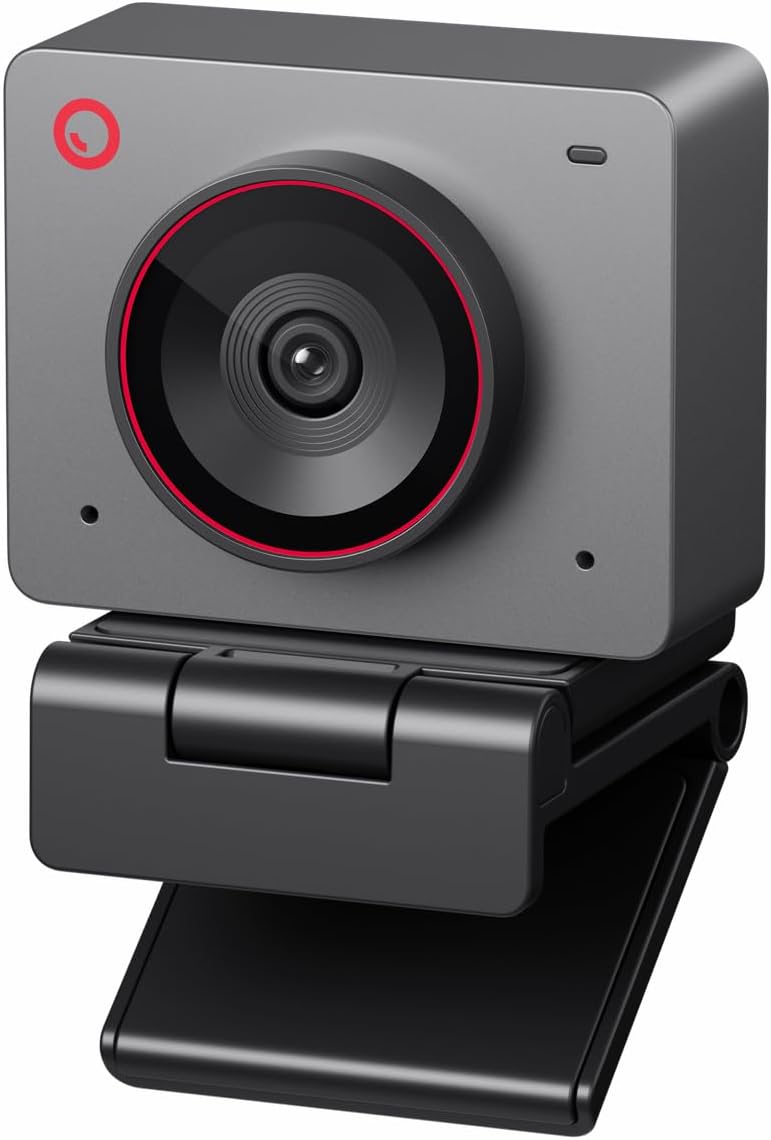
The Obsbot Meet 2 punches well above its size, packing a 1/2″ CMOS sensor, PDAF autofocus, and genuinely capable AI auto-framing into a body that weighs just 40.5 grams — making it the most feature-dense compact webcam in its price range. Its AI tracking and gesture control are the primary differentiators over conventional static webcams, and they work reliably enough to justify the choice for users who move during calls or presentations. The trade-off is audio: the dual omnidirectional microphones are adequate for routine calls but fall short of the beamforming implementations found at higher price points.
How We Scored It
Category Deep-Dives
Image Quality
8.5 / 10 30% weightingThe Obsbot Meet 2 uses a 1/2″ CMOS sensor with a fast f/1.8 aperture — a pairing that positions it solidly in the upper tier of mid-range webcam hardware. The 1/2″ format is notably larger than the 1/3″ and smaller sensors found in budget webcams, with meaningfully better photon collection efficiency that pays dividends in the variable lighting conditions common to home office environments. At 4K/30fps or 1080p/60fps with HDR support, the Meet 2 delivers sharp, well-exposed video that competes directly with webcams from brands with longer category histories. The f/1.8 aperture is among the widest available in the webcam category, allowing the sensor to capture substantially more light than competitors running f/2.0 or narrower — particularly important in evening home office sessions lit by lamps rather than overhead fixtures.
Phase Detection Autofocus (PDAF) is one of the Meet 2’s standout imaging capabilities, and it performs noticeably better than the contrast-detection autofocus found in most webcams at similar price points. Where contrast-detection systems hunt for focus and can exhibit visible hesitation or momentary softness during subject movement, PDAF locks onto and tracks a face almost instantaneously. For home office users who move frequently — stepping back from the desk, turning to reference materials, leaning forward — this translates to consistently sharp video rather than the momentary blur that plagues slower autofocus implementations. The 4x digital zoom preserves usable resolution headroom even when cropping, a practical advantage of starting with a 4K sensor.
HDR processing in the Meet 2 handles the classic home office backlighting challenge — a window behind you — with solid competence. The system manages simultaneous exposure of a bright background and a shaded foreground better than fixed-exposure webcams, though it does not match the more sophisticated HDR implementations in the Logitech MX Brio 705 and Razer Kiyo Pro Ultra. The 8.5 score reflects genuinely strong imaging hardware at the mid-range price point, offset slightly by a sensor that is two stops smaller (in physical area terms) than the top performers in our evaluation. For the vast majority of home office call scenarios, however, this gap is visible only in challenging low-light conditions — in a properly lit desk setup, the Meet 2 produces professional-quality output.
Bottom line on image quality: The 1/2″ sensor with f/1.8 aperture and PDAF autofocus is a strong hardware combination that clearly outperforms lower-priced alternatives. In well-lit conditions, image quality rivals cameras that cost significantly more. The gap to the top tier becomes apparent only in genuinely dim environments.
Audio Performance
7.5 / 10 25% weightingThe Meet 2 includes dual built-in omnidirectional microphones with noise reduction and Auto Gain Control — a step up from the single-microphone designs found in entry-level webcams, but a different architecture from the beamforming implementations that define audio performance at the premium tier. The distinction matters for home office use: omnidirectional microphones, by design, pick up sound equally from all directions, which means they capture not just your voice but also ambient noise from HVAC systems, distant conversations, keyboard clicks, and other sources that a beamforming implementation would suppress by focusing its pickup pattern toward your voice. The result is audio that is clear in quiet environments but progressively more susceptible to background noise as your home office environment becomes less controlled.
The noise reduction system in the Meet 2 attempts to compensate for the omnidirectional pickup pattern through digital processing, and it largely succeeds for the most common noise sources. Multiple reviewers have noted that the microphone performs well for standard video calls, capturing voice clearly without the metallic or clipped quality that aggressive noise reduction can introduce. Auto Gain Control prevents the volume from fluctuating dramatically when you move closer to or further from the camera, which is a practical benefit for users whose working position varies during calls. The Meet 2’s audio is, by most accounts, better than expected for a webcam in this weight and price class — but it is still clearly a webcam microphone in character, and users who prioritize audio quality in professional calls will notice the difference compared to beamforming implementations.
The 7.5 audio score reflects audio that is genuinely adequate and above average for the category at this price point, but not the equal of the dual beamforming microphones in the Logitech MX Brio 705 or the multi-element systems in the Razer Kiyo Pro Ultra. Users who already own a dedicated microphone — any decent USB condenser — can effectively bypass this category in their decision-making. For those relying solely on the webcam for call audio in moderately noisy home environments, it is the one area where the Meet 2 gives meaningful ground to pricier alternatives.
Bottom line on audio performance: Above average for a mid-range webcam, and adequate for the majority of home office call scenarios. The omnidirectional pickup pattern is the key architectural limitation — it performs best in quiet environments and adequately in moderately noisy ones. Falls short of the beamforming implementations found in the top-tier webcams.
Usability & Features
9.0 / 10 20% weightingAI auto-framing is the Obsbot Meet 2’s primary differentiator, and it is well-executed. The system operates in two modes: single-person mode keeps the nearest identified subject centered in the frame, adjusting the digital crop in real time as they move; group mode widens the frame automatically to accommodate multiple participants as they enter and exit the shot. Both modes work without any user intervention after initial activation — you simply enable the feature in OBSBOT Center or via gesture, and the camera manages framing independently thereafter. For home office users who present while standing, move between a desk and whiteboard, or participate in multi-person room calls, this capability removes a category of friction that static webcams cannot address.
Gesture control extends the camera’s hands-free capabilities further. A wave of the hand activates AI framing; a specific gesture zooms in or out; another gesture returns the frame to a wide view. The system recognizes these inputs reliably in normal lighting conditions and responds within a second or two of the gesture being completed. This is not a trivial implementation — gesture-triggered camera controls on webcams tend to be either unreliable or slow, and the Meet 2’s execution is better than average. Practically, it means you can adjust your camera framing mid-call without physically touching the device or navigating to a settings panel, which is a genuine usability improvement over static webcams.
The OBSBOT Center software provides comprehensive control over all camera parameters: AI framing behavior, zoom level and speed, beauty mode intensity, noise reduction aggressiveness, exposure compensation, white balance, and HDR toggle. The interface is well-organized and functions reliably on both Windows and macOS. Plug-and-play USB operation works without drivers for basic function — OBSBOT Center is optional for enhanced control rather than required for operation. The combination of gesture control, AI framing with group mode, PDAF, 4x digital zoom, beauty mode, HDR, and a capable companion app makes the Meet 2’s feature set the strongest in its price bracket, earning its position as the highest usability score in the mid-range tier.
Bottom line on usability and features: The best feature set in the mid-range webcam tier. AI auto-framing in both single-person and group modes, gesture control, PDAF, 4x digital zoom, and OBSBOT Center software combine to make this camera meaningfully more capable than static alternatives at the same price. This is where the Meet 2 earns its place in the rankings.
Value
7.0 / 10 15% weightingThe Obsbot Meet 2 is priced in the mid-range tier, positioned below the premium cameras but above the entry-level field. The value case is genuine but not uncomplicated. On the positive side: you get a 1/2″ sensor, f/1.8 aperture, PDAF, AI auto-framing, gesture control, 4K/30fps resolution, and a capable software ecosystem in a remarkably compact body — a hardware and feature combination that would have required spending considerably more even two years ago. For users whose primary reason to buy a webcam is to gain AI-powered auto-framing and tracking, the Meet 2 is the most affordable credible option in our evaluation for that specific capability.
The complication is the competitive context. The Insta360 Link 2C offers comparable 4K imaging hardware — also a 1/2″ sensor with f/1.8 — plus AI tracking, and adds an integrated privacy shutter at a similar price point. The Logitech Brio 4K is available at prices that sometimes approach the Meet 2’s range and includes Windows Hello support and Logitech’s broader ecosystem integration, albeit with an older sensor architecture. The 7.0 value score reflects a product that delivers real value for its specific strengths — particularly AI framing — but operates in a price tier where competitors force meaningful trade-off analysis rather than an obvious call.
For users who specifically want AI auto-framing and gesture control without paying premium prices, the Meet 2 is the correct choice and represents solid value within that narrowed criteria. For users who prioritize audio performance or a physical privacy shutter, alternatives at similar prices may serve them better dollar-for-dollar. The value score is honest rather than penalizing — this is a good webcam at a fair price, not a bargain buy and not a premium play.
Bottom line on value: Solid value for users who prioritize AI auto-framing and gesture control, which are genuine differentiators at this price. Evaluated against the full breadth of what comparable mid-range competitors offer, the value is good but not exceptional — alternatives close the gap depending on which features you weight most.
Physical Design
8.0 / 10 10% weightingThe Obsbot Meet 2 is, by a substantial margin, the most compact 4K AI webcam in our evaluation. At 40.5 grams — roughly the weight of a pair of earbuds — it is genuinely pocketable, and its physical dimensions (approximately 45 × 36 × 22mm) allow it to sit on a monitor clip without the visual weight that larger webcams impose. For home office workers who travel regularly and want to carry their webcam setup, the Meet 2 is the only 4K option in this evaluation that makes that practical without a dedicated bag slot. The magnetic monitor mount provides secure attachment to most monitor bezels and can be rotated for angle adjustment; a standard ¼″-20 tripod thread opens the door to arm mounting, desk stand use, or travel tripod configurations.
Build quality is honest for the price tier: the plastic body feels solid rather than flimsy, with no perceivable flex at the mount point and a smooth hinge mechanism for angle adjustment. The camera is available in three finishes — Space Gray, Cloud White, and Aurora Green — a degree of color customization unusual in the webcam category. The USB-C cable is included along with a USB-A adapter, meaning compatibility with essentially any modern laptop or desktop regardless of port configuration. The magnetic privacy cap is the one physical design element that sits a rank below the best: it works, it blocks the lens, but it is a separate piece that can be misplaced, and it does not provide the tactile, built-in confidence of a sliding integrated shutter like those in the Logitech and Razer top-tier models.
Bottom line on physical design: The compactness is a genuine strength — no other 4K AI webcam in this evaluation approaches this size-to-feature ratio. The magnetic clip mount, ¼″ tripod thread, and included USB-A adapter round out a well-considered physical package. The magnetic privacy cap instead of an integrated shutter is the one point where the design falls short of the tier above.
About the Manufacturer
bot
Obsbot is the consumer brand of Remo Tech Co., Ltd., a Shenzhen-based technology company founded in 2016 and focused on AI-powered camera systems for video communication and content creation. Remo Tech’s engineering background is in intelligent tracking and autonomous camera control — the company applied computer vision and AI framing to the professional broadcast camera category before pivoting its Obsbot brand toward the consumer webcam market as remote work expanded the addressable opportunity.
The Obsbot product line is organized around two core use cases. The Obsbot Tiny series (Tiny 2, Tiny 2 Lite) are motorized PTZ (pan-tilt-zoom) webcams with physical gimbal movement that literally rotates the camera to follow a subject — the most literal interpretation of auto-tracking. The Obsbot Meet series (Meet 2, Meet SE) takes a different approach: a fixed-body camera that uses digital cropping and PDAF rather than physical movement to achieve framing. The Meet 2 represents the premium tier of the fixed-body line, with a larger sensor and more capable AI than the Meet SE below it.
Remo Tech sells directly through its own website and through major retail channels including Amazon, B&H Photo, and international distributors. OBSBOT Center, the companion software for all Meet series cameras, is actively maintained with firmware updates that have added features after launch — the November 2024 update extended AI framing reliability and added adjustments to the beauty mode pipeline. For a mid-market product from a specialized brand, the software support cadence is a positive signal about the company’s commitment to the product line.