M57
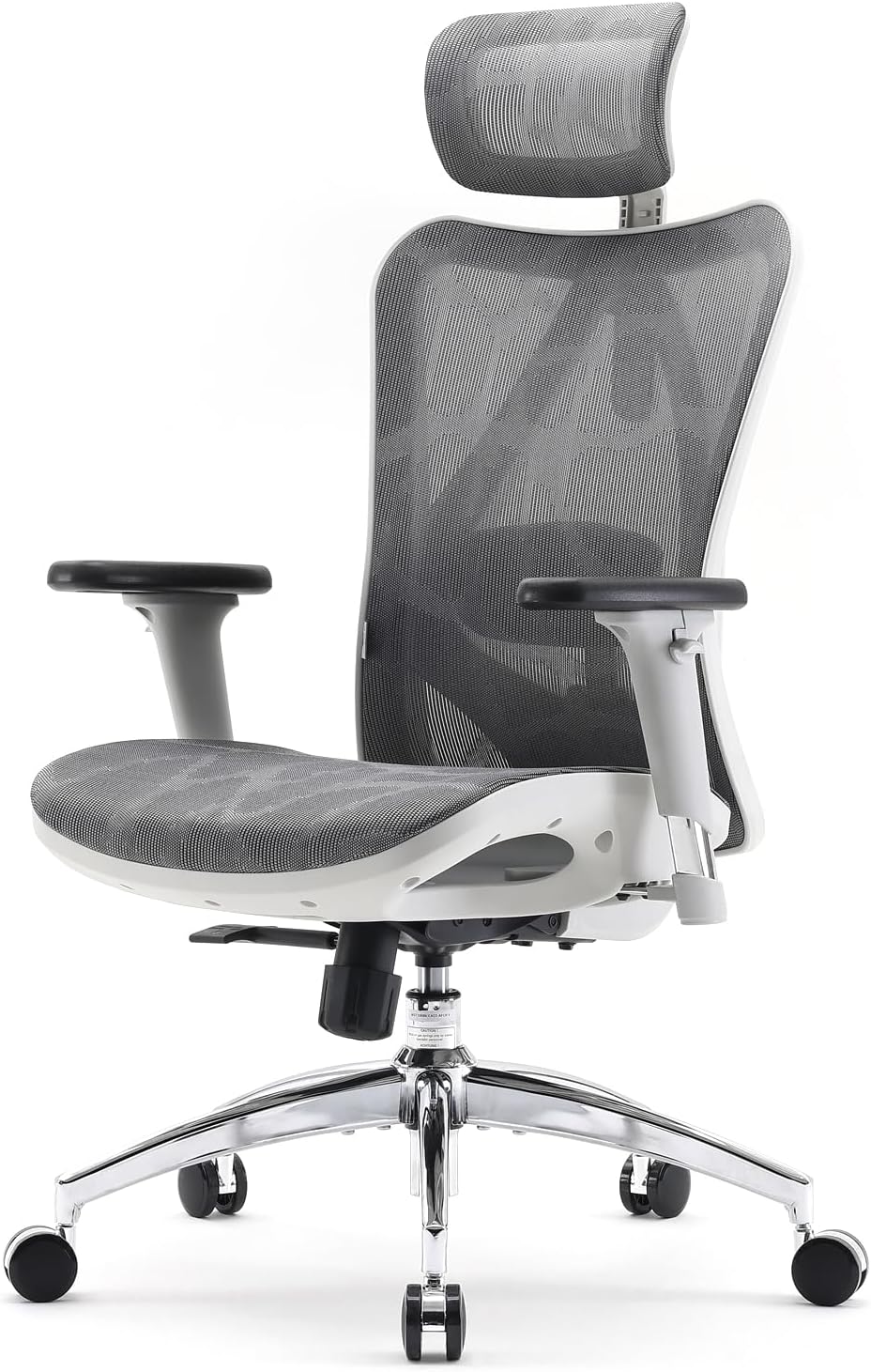
The SIHOO M57 pairs a full-mesh back and seat with bi-directional lumbar adjustment and 3D arms at a budget price — a spec sheet that reads better than most chairs in its tier. The bi-directional lumbar is a genuine step above the single-axis pads common at this price, and the mesh is dense and well-tensioned. Build quality and the 3-year warranty are consistent with the budget tier, and the absence of seat-depth adjustment limits fit precision at the height extremes.
How We Scored It
Category Deep-Dives
Ergonomics & Support
7.0 / 10 30% weightingThe SIHOO M57’s defining ergonomic feature is its bi-directional lumbar adjustment — the lumbar pad moves both vertically (height) and horizontally (depth/projection). This is a meaningful advantage over the single-axis lumbar found on many budget competitors, including the Ticova ranked directly above it. Users whose lumbar curve requires more forward projection can dial it in; users who need only light support can pull it back. The range of adjustment is narrower than the multi-axis lumbar systems on mid-range chairs, but the ability to tune depth at all is unusual at this price.
The backrest is full mesh and provides passive support without dynamic flex. It holds the back in a consistent position throughout the session, which is adequate for users who maintain a relatively stable upright posture. The lumbar pad projects from a fixed mounting point on the mesh frame, so its support is most effective in an upright position and diminishes as the user reclines significantly.
No seat depth adjustment is present, which limits fit precision for users significantly shorter or taller than the chair’s target range. The recline range extends to approximately 126° and includes adjustable tilt tension, covering standard working and casual recline positions.
Bottom line on ergonomics: The bi-directional lumbar is the standout — real depth adjustment at a price where single-axis pads are the norm. Passive mesh support and the missing seat-depth adjustment cap how far the fit can be dialed in, but within its target size range the M57 covers the fundamentals.
Comfort & Materials
7.5 / 10 25% weightingThe M57’s full-mesh construction — both back and seat — is its strongest comfort asset and the most meaningful differentiator from the Ticova ranked above it. The mesh seat allows air to circulate beneath the user, which prevents the heat buildup that foam-seat alternatives accumulate over extended sessions. For users who work in warm environments or who sit for six or more hours daily, this is a practical comfort advantage that compounds over time.
The mesh density is consistently noted in owner feedback as firmer and more durable than similarly priced competitors. It supports without excessive sag under sustained load, and the tension is appropriate for a broad weight range without feeling like a hammock. The seat pan shape includes a waterfall front edge to reduce pressure behind the knee, which is the correct design choice for all-day use.
The 3D armrests use PU-padded pads that are adequately cushioned for forearm support. The headrest is included and height-adjustable, though owner feedback notes it tends to be functional rather than outstanding at this tier. No significant comfort concerns are reported in the mechanism or base components.
Bottom line on comfort: Full-mesh back and seat make breathability the M57’s clearest comfort advantage over foam-seat budget rivals. The mesh is denser and better-tensioned than most at this price, though the headrest and arm padding are functional rather than refined.
Value for Money
7.0 / 10 20% weightingThe M57 offers a genuinely competitive spec sheet at its price: full-mesh construction, bi-directional lumbar, 3D arms, and a 3-year warranty. Among budget chairs, this combination of features is difficult to match. The lumbar depth adjustment in particular is a feature typically found in a much higher tier, and its presence here represents a real value-add rather than a paper specification.
The value case has limits. The chair is priced slightly above the Ticova and delivers better ergonomic adjustability and full-mesh breathability in return, which is a reasonable trade. But the gap to the next tier up is where the value calculus becomes more complex: the HON Ignition 2.0, for example, adds a lifetime structural warranty, synchro-tilt, and decades of commercial durability data for an incremental price premium that becomes easier to justify over a 5–7 year ownership horizon. The M57 should be evaluated as a 3–4 year chair, not a decade-long investment.
Bottom line on value: A genuinely competitive budget spec sheet, with the lumbar depth adjustment punching above its tier. As the price climbs toward the next bracket, the gap to better-built chairs like the HON Ignition 2.0 narrows — evaluate it as a 3–4 year chair, not a long-term investment.
Build Quality & Longevity
6.0 / 10 15% weightingThe SIHOO M57 uses a nylon base and polypropylene frame components standard to the budget chair segment. Build rigidity is adequate for home office use, and there are no widespread reports of early structural failure. The mesh is praised for its density and has held up better than some comparably priced alternatives in extended use feedback, which is the most encouraging long-term data point available for this product.
The 3-year warranty covers parts and structural components and is a step up from the 2-year coverage on budget alternatives like the Ticova. It is still short relative to the 5-year coverage from Branch and the lifetime structural warranty from HON — appropriate for a chair in this tier, but worth naming as a constraint on expected longevity. SIHOO is a Chinese budget brand without the established commercial support infrastructure of HON or the direct-to-consumer accountability model of Branch; warranty claims and post-purchase support have received mixed feedback in owner reports.
Mechanism smoothness and adjustment component durability at the 3–4 year mark is the primary unknown at this price tier. Short-term feedback is broadly positive; long-term data is limited by the brand’s relatively recent market entry.
Bottom line on build: Adequate rigidity and a denser-than-average mesh, but budget-tier frame materials and a 3-year warranty set realistic expectations. Long-term mechanism durability past the 3–4 year mark is the main unknown, and post-purchase support is inconsistent.
Adjustability Range
6.5 / 10 7% weightingThe adjustment set covers: seat height, bi-directional lumbar (height and depth), 3D armrests (height, pivot, and forward/back translation), recline with tilt tension, and headrest height. This is a stronger adjustment package than most chairs at this price, with the bi-directional lumbar being the standout feature and a genuine advantage over single-axis alternatives.
The meaningful gap is seat depth adjustment, which is absent. This limits fitting precision for users at the shorter or taller end of the chair’s target range. Users who are 5’4” or shorter, or 6’2” or taller, are most likely to notice the fixed seat pan depth as a fit limitation. Within the typical range (roughly 5’4”–6’1”), the existing adjustments cover the primary fitting variables reasonably well.
Bottom line on adjustability: A stronger adjustment set than most budget chairs, anchored by the bi-directional lumbar. The missing seat-depth adjustment is the one meaningful gap, most noticeable for users at the short or tall extremes of the chair’s range.
Aesthetics & Footprint
6.5 / 10 3% weightingThe M57 presents as a straightforward, utilitarian full-mesh task chair. Its visual identity is functional rather than distinctive — the black mesh, conventional five-star nylon base, and integrated headrest read as a competent budget office chair rather than a design piece. Colorway options are limited compared to premium chairs that offer multiple fabric and frame finishes, so buyers selecting on appearance have less to work with here.
The footprint is standard for a mid-back ergonomic chair, with a base diameter typical of the class and no unusual space requirements. It fits comfortably in a conventional home office setup without dominating the room. For users whose workspace is also a visible living area, the M57 is unobtrusive but makes no particular visual statement.
Bottom line on aesthetics: A clean, utilitarian mesh design that blends into a typical home office. No strong visual identity and limited finish options, but nothing that detracts — appropriate for a chair chosen on function and price.
About the Manufacturer
SIHOO is a Chinese ergonomic chair brand that has grown primarily through Amazon and online retail channels rather than the contract-furniture and dealer networks used by established commercial manufacturers. The brand has built its presence in the budget ergonomic segment around full-mesh designs, and the M57’s mesh quality is among the most consistently praised aspects of its product line.
Warranty support and post-purchase service quality have received more mixed feedback. As an online-first brand without a domestic commercial support infrastructure comparable to HON or Steelcase, SIHOO is best evaluated on the strength of the product at its price rather than on long-term service expectations — buyers should set expectations accordingly for a chair in this tier.