C233-B Auto-Feed
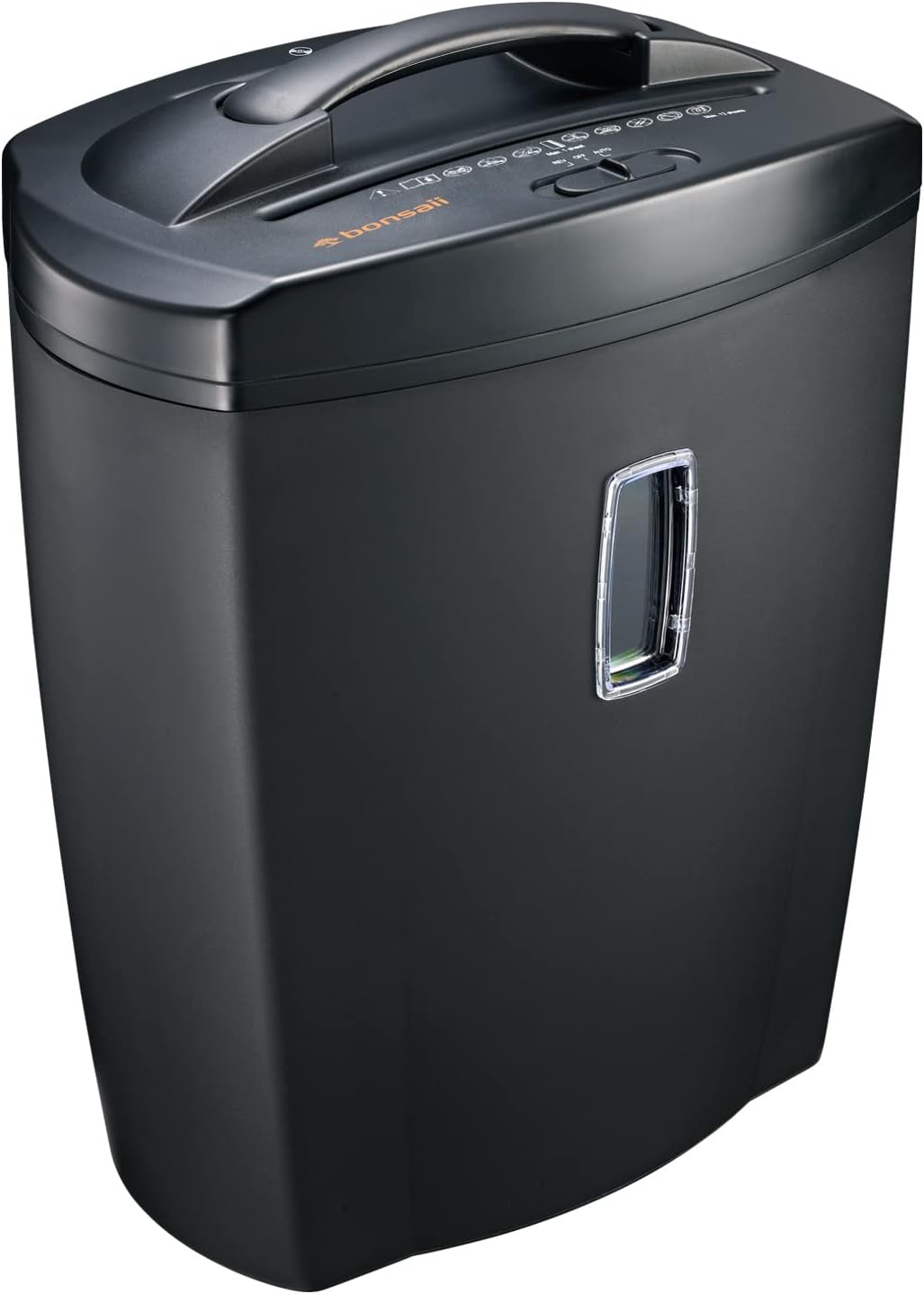
The Bonsaii C233-B is the value play in auto-feed shredding. Drop up to 110 sheets into the tray, close the lid, and walk away while it works through the stack in true P-4 micro-cut — the same security level as our top picks — for noticeably less than the comparable micro-cut auto-feed machines. It adds two things its rivals usually charge extra for: four casters so you can roll it where the paper is, and a clear 6.1-gallon bin that tells you when it’s full at a glance. The trade-offs are honest and predictable — auto-reverse rather than active jam prevention, no touch-sensing safety shutoff, and a motor that owners note is on the louder side — which is why it lands at #4 rather than the podium. But for the buyer who wants unattended micro-cut shredding without paying the premium, the math works.
How We Scored It
Category Deep-Dives
Capacity & Speed
9.0 / 10 20% weightingAuto-feed is the whole reason to buy the C233-B, and it does the job well. The drop-in tray holds 110 sheets; load it, close the lid, and the machine works through the stack unattended while you do something else — the difference between a filing-cabinet purge that takes an afternoon of standing at a slot and one you start and forget. A separate manual slot handles up to 12 sheets plus credit cards and CDs for the one-off items you don’t want to drop in the tray.
Run time is sensibly matched to the feed style: about 30 minutes continuous in auto mode and 10 minutes manual before a 60-minute cool-down. Thirty minutes of unattended shredding clears a great deal of paper in one cycle, and because the C233-B cuts micro — particles pack denser than cross-cut strips — its 6.1-gallon bin swallows a lot of shredded volume between empties. The clear bin is a genuinely useful touch here: with an auto-feed machine running on its own, being able to see the fill level across the room saves you from an overflow mid-stack.
The 9.0 rather than higher reflects where it sits against the class leader. The Aurora AU120MA pushes the tray to 120 sheets and is the auto-feed machine we rank above it; the C233-B’s 110 is a hair behind on paper, and the 60-minute cool-down is longer than some rivals’. Neither is a problem for the workloads this machine is built for — they’re just the reasons it’s the value pick rather than the outright capacity champion.
Bottom line on capacity: A 110-sheet tray plus a 12-sheet manual slot and a 30-minute auto cycle make this a true unattended backlog-clearer. The clear bin and casters make it pleasant to live with.
Security Level
9.0 / 10 25% weightingThe C233-B cuts to P-4 micro-cut under the DIN 66399 standard, producing 5/32″ × 15/32″ (4×12 mm) particles — the same security tier as the Fellowes Powershred LX210 and LX220 at the top of our rankings. That’s our editorial baseline for any document carrying personal data: tax forms, bank and brokerage statements, medical records, anything with an account number or signature. A single letter page becomes well over 1,200 particles, versus the roughly 200 confetti strips a P-3 cross-cut machine leaves behind.
What makes this notable is the company it keeps. Micro-cut auto-feed machines are rarer than cross-cut ones — auto-feeding tiny particles is harder to engineer, so plenty of high-capacity machines quietly drop to a weaker cut to hit a price. The C233-B doesn’t: it delivers genuine P-4 micro-cut and a 110-sheet tray, which is exactly the combination that earns it a strong security score.
The 9.0 rather than a perfect score is simply because this is P-4, not P-5. The only P-5 machine in our lineup, the Aurora AU1060MA, halves the particle size again to roughly 2,592 pieces per page — genuine high-security territory for third-party client records. For a home office, P-4 micro-cut is the correct and sufficient standard, and the C233-B delivers it at high volume without cutting the corner.
Bottom line on security: True P-4 micro-cut in an auto-feed body — the harder, rarer engineering — at a value price. Step up to the P-5 Aurora only if you routinely destroy third-party confidential material.
Reliability & Jam Resistance
7.5 / 10 20% weightingThis is where the C233-B takes its first real deduction, and it’s structural to the design rather than a flaw in this particular machine. Every auto-feed shredder carries an inherent reliability penalty in our scoring: the tray mechanism adds grip rollers and feed sensors — moving parts that can misfeed on glossy, folded, or stapled-corner paper, and that simply don’t exist on a manual machine. The C233-B sits in the same boat as every auto-feed unit in our lineup, including the higher-ranked Aurora AU120MA.
For jam handling, the C233-B relies on auto-reverse: when it senses an over-thick pass, it backs the paper out so you can thin the stack and re-feed. That’s the standard approach, and it clears most jams effectively — but it’s reactive. It’s a step behind the active, thickness-sensing 100% Jam Proof system on the Fellowes machines, which stops an over-stuffed pass before it binds. That gap is the difference between our #1 and a value auto-feed pick, and it’s reflected honestly in the score.
One ownership note matters more on an auto-feed micro-cut machine than on any other: the cutters need periodic oiling to hold capacity, and a tray that feeds 110 sheets at a time runs a lot of paper past them. A lubricant sheet (or a bead of shredder oil on a sheet) every bin-empty or two is the cheapest reliability insurance there is, and skipping it is the most common reason a micro-cut shredder seems to “lose” capacity within a year.
Bottom line on reliability: A solid 7.5 — the auto-feed complexity deduction every tray machine takes, plus reactive auto-reverse rather than active jam prevention. Keep it oiled and feed clean stacks and it should serve well.
Value & Versatility
9.0 / 10 15% weightingValue is the C233-B’s headline, and it’s the category that pulls its overall score up. It undercuts every comparable micro-cut auto-feed machine in our lineup while delivering the feature buyers actually shop for — a big unattended tray in true P-4 — rather than trimming the cut to hit the price. For the household or small office that has a real backlog to destroy but doesn’t want to spend like a corporate mailroom, that’s the most compelling combination on this list.
It also throws in versatility that costs extra elsewhere. The four casters turn a heavy machine into one you can roll between the home office and the room where the paper actually piles up, and the clear 6.1-gallon bin removes the guesswork of when to empty — both genuinely useful on a machine designed to run on its own. Beyond paper it handles credit cards and CDs through the manual slot, covering the awkward items a paper-only shredder forces you to deal with another way.
Bottom line on value: The best price-to-capability ratio in auto-feed micro-cut — casters and a clear bin included rather than upsold. If unattended shredding on a budget is the goal, this is the pick.
Safety
7.5 / 10 10% weightingThe C233-B’s safety story is a mixed but reasonable one. Its biggest protection is structural: in auto-feed mode the paper goes into a closed tray rather than an open slot, so the cutters aren’t exposed during the bulk of the work — a meaningful advantage in a house with curious hands around. It also includes the conventional protections: an overheat shutoff tied to the run-time limit, and the auto-reverse that backs paper (or anything else) out of the feed path.
What it lacks is active touch-sensing. The Fellowes machines carry SafeSense, an electronic sensor that kills the cutters the instant fingers touch the opening; the C233-B has no equivalent, so the open manual slot relies on the conventional narrow-opening approach. For most adults that’s perfectly adequate, but a home with young children or pets gets a clearly higher margin from a SafeSense-equipped machine. The 7.5 reflects exactly that: safe in normal use, without the best-in-class active shutoff.
Bottom line on safety: The closed auto-feed tray is a real safety plus, but there’s no active touch-sensing shutoff. Households with kids or pets should weigh a SafeSense Fellowes for the manual slot.
Noise
7.5 / 10 10% weightingA shredder loud enough to interrupt a call doesn’t get used during work hours — and a shredder that doesn’t get used is a security hole with a power cord. Noise is where the C233-B’s value engineering shows: owners consistently report it runs on the louder side, particularly under a full auto-feed load, and it lacks the dedicated quiet-operation engineering of the SilentShred Fellowes machines. That’s the most common functional complaint in owner feedback, and we take it at face value.
We score Noise from quiet-operation engineering claims cross-checked against owner-reported experience under load, rather than from a single decibel figure — manufacturers are inconsistent about publishing measured numbers, so we won’t present one we can’t stand behind. On that basis the consistent owner reports of above-average noise place the C233-B at a fair-but-not-quiet 7.5. There’s a practical mitigation worth noting: because it’s auto-feed, you can start a stack and leave the room, so the noise matters less than it would on a machine you have to stand over.
Bottom line on noise: Owners report it’s louder than average and it has no dedicated quiet engineering — a 7.5. The saving grace is that auto-feed lets you walk away while it runs.
About the Manufacturer
saii
Bonsaii is the aggressive-value brand in home and small-office shredding. Where Fellowes leads on engineering and warranty, Bonsaii competes on price-to-capability: it consistently delivers headline features — high-capacity auto-feed trays, true micro-cut security, casters, clear bins — at prices that undercut the established names, and it has built a large, well-reviewed catalog doing exactly that.
The C233-B is the brand’s argument in a nutshell. It undercuts every comparable micro-cut auto-feed machine in our lineup while adding the casters and clear 6.1-gallon bin that rivals tend to charge extra for. Elsewhere in the range, the C234-A is a credible budget micro-cut entry point. The pattern is consistent: Bonsaii gets you the feature you came for at a lower price.
The trade-offs are equally consistent and worth going in with eyes open: duty cycles and noise are where the cost savings tend to show, and jam handling is reactive auto-reverse rather than the active prevention on premium machines. For moderate workloads — the use case most home offices actually have — the math still works comfortably in Bonsaii’s favor.